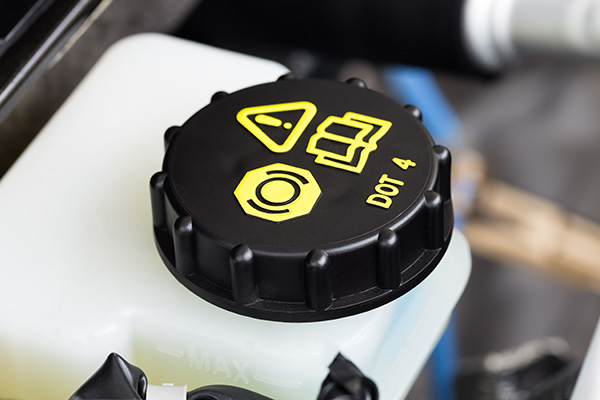
Brake fluid is easy to forget because it does not sit in front of you like worn tires or squeaky brake pads. It stays sealed away in the hydraulic system, doing its job every time you press the pedal.
Until age catches up with it.
Old or contaminated brake fluid can change how the pedal feels, how well the system handles heat, and how long expensive brake parts last. The brakes may still work, but the fluid may no longer provide the system with the protection it needs.
Brake Fluid Transfers Pedal Pressure
When you press the brake pedal, brake fluid carries that pressure through the brake lines to the calipers or wheel cylinders. That pressure helps squeeze the brake pads or shoes against the rotors or drums.
The fluid must remain clean, stable, and free of air. It also has to handle heat. Brakes create a lot of heat during normal driving, especially in traffic, on hills, while towing, or during repeated stops.
If the fluid is in good condition, the pedal should feel familiar and consistent. When the fluid breaks down or becomes contaminated, the pedal can start feeling different, even if the pads and rotors still have life left in them.
Brake Fluid Absorbs Moisture Over Time
Most brake fluid is hygroscopic, which means it absorbs moisture from the air over time. The system is sealed, but moisture can still enter slowly through hoses, seals, the reservoir cap, and normal aging.
That moisture lowers the fluid’s boiling point. Once brake fluid gets hot enough, water in the fluid can turn into vapor. Vapor compresses more than liquid so that the pedal may feel soft, spongy, or lower than normal.
A soft pedal after heavy braking is not something to shrug off. It may mean the fluid is overheating or that the hydraulic system needs attention.
Old Fluid Can Lead To Internal Corrosion
Moisture in brake fluid does more than affect pedal feel. It can also encourage corrosion inside the brake system. Brake lines, calipers, wheel cylinders, ABS hydraulic components, and fittings all depend on fluid that does not carry water and debris through the system.
Corrosion can start quietly. A caliper may begin sticking. A bleeder screw may seize. A brake line may weaken. An ABS component may become more sensitive to dirty fluid than drivers realize.
The outside of the brakes might look normal, while the fluid inside is aging poorly. This is why regular maintenance should include more than checking pad thickness.
Contamination Can Come From The Wrong Fluid
Brake systems are not designed for random fluids. The correct brake fluid type matters. If oil, power steering fluid, transmission fluid, water, or the wrong brake fluid gets into the reservoir, rubber seals can swell or break down.
That kind of contamination can become expensive because it may affect the master cylinder, calipers, hoses, ABS parts, and other hydraulic components. Even a small amount of the wrong fluid can create problems throughout the system.
If someone accidentally adds the wrong fluid, do not keep driving and hope it mixes in. The system should be checked quickly before more parts are damaged.
Dirty Brake Fluid Can Affect ABS Operation
Modern brake systems often include ABS, traction control, and stability control. These systems use valves, pumps, sensors, and hydraulic passages that need clean fluid to work properly.
Old, dark, or contaminated brake fluid can contribute to sticking valves or poor hydraulic response. It may not be the only cause of an ABS warning light, but it can add stress to parts that already work under tight control.
A brake inspection should assess fluid condition, warning lights, pedal feel, leaks, pad wear, and caliper movement. The brake system works as a single unit, not as separate parts.
Warning Signs Drivers May Notice
Brake fluid problems do not always create a clear warning right away. Sometimes the first clue is a pedal that feels softer than it used to. Other times, the brakes feel weaker after repeated stops, or the pedal travel feels longer.
Watch for a soft or spongy pedal, a brake warning light, dark fluid in the reservoir, a burnt smell after braking, or brakes that fade during hills or traffic. Fluid leaks near a wheel or under the master cylinder area also need fast attention.
Do not just top off low brake fluid. Low fluid can mean worn brake pads or a leak, and those are very different repairs.
Brake Fluid Service Helps Protect The System
Brake fluid service removes old fluid and replaces it with the correct fresh fluid. This helps restore proper fluid condition and reduces moisture and contamination inside the system.
It will not fix worn pads, damaged rotors, leaking calipers, or a bad master cylinder. It is maintenance, not a cover-up for a brake problem. Still, it can help protect hydraulic parts and keep the pedal feel more consistent.
The best time to deal with brake fluid is before the pedal changes. Waiting until the brakes feel strange usually means the fluid has already been ignored for too long.
Get Brake Fluid Service In Fairburn, GA, With Gowen's Automotive Repairs
If your brake pedal feels soft, your brake fluid appears dark, or you are not sure when it was last serviced, Gowen's Automotive Repairs in Fairburn, GA, can perform an inspection to assess the condition of the brake system.
Schedule a visit and keep old or contaminated brake fluid from turning into a larger brake repair.